


Hello Investors,
This week saw a flurry of action from earnings to interest rates to currency, culminating in the liquidation of a fledgling hedge fund, marking the first major victim of the AI trade (so far).
In today’s update:
Microsoft, Meta, Apple, and Amazon all reported earnings this week, resulting in a mix of double digit gains and losses for each.
A hedge fund called "Situational Awareness” was liquidated after losing 67% of its value with Citadel Securities purchasing the entire portfolio.
The Federal Reserve chose to keep their key interest rate steady, sending shockwaves through the bond market.
The US and Japan coordinated multiple currency interventions to support the Yen.
Also, a warm welcome to our newest subscribers! I hope that you find our content to be valuable to your investment process.
If you have any feedback about how we can improve our research, please shoot an email over to brian@pinecreek.capital
Let’s dive in!
-Brian
By the Numbers
Equities
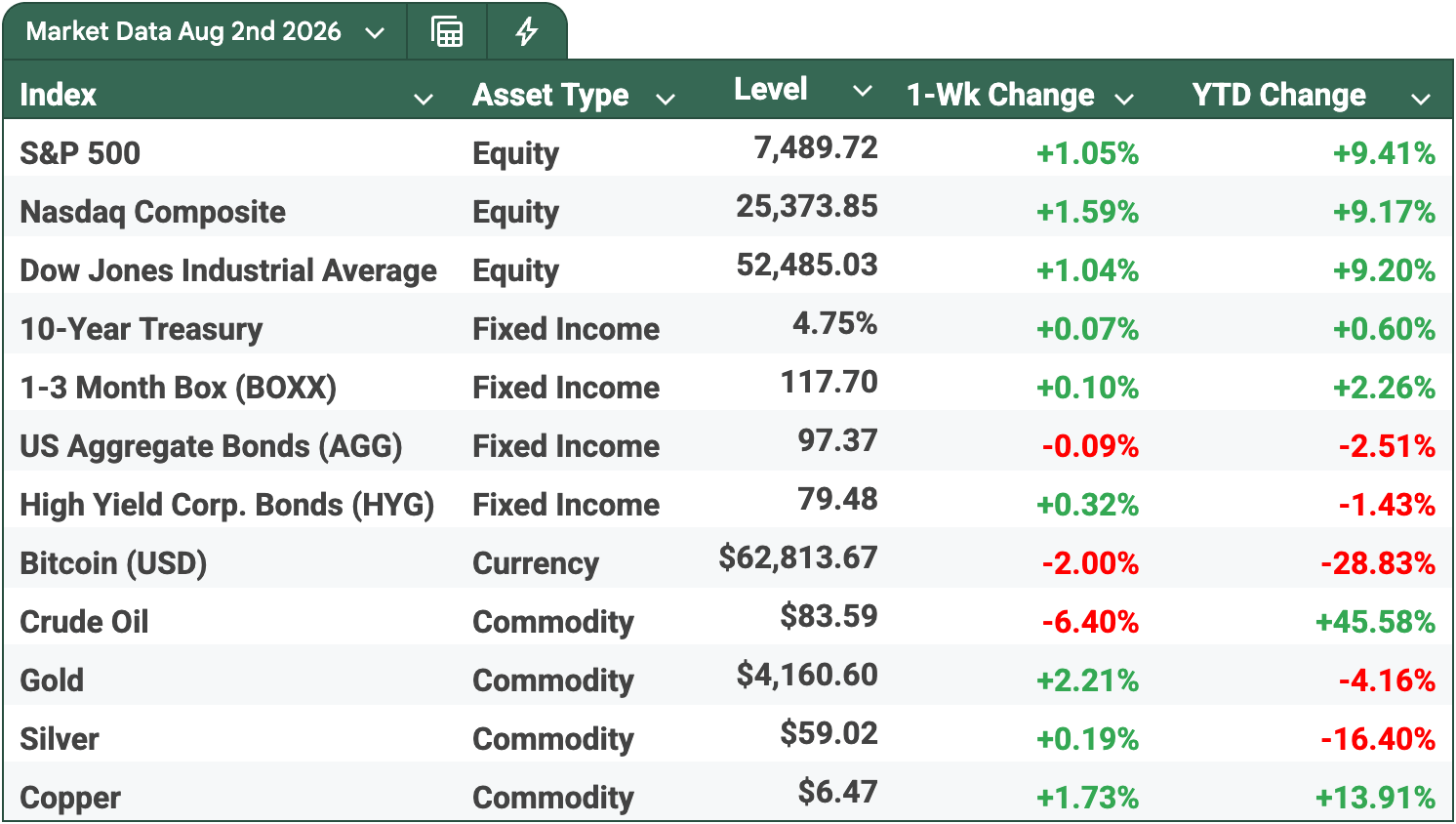
Stocks were up this week, as the rotation out of AI found a small but sharp reversal. The S&P 500 and Dow rose 1.05% and 1.04%, respectively, while the tech-heavy Nasdaq rose by 1.59%. In the spotlight were four of the so-called “magnificent seven” which reported earnings this week.
Magnificent Microsoft | Maleficent Meta
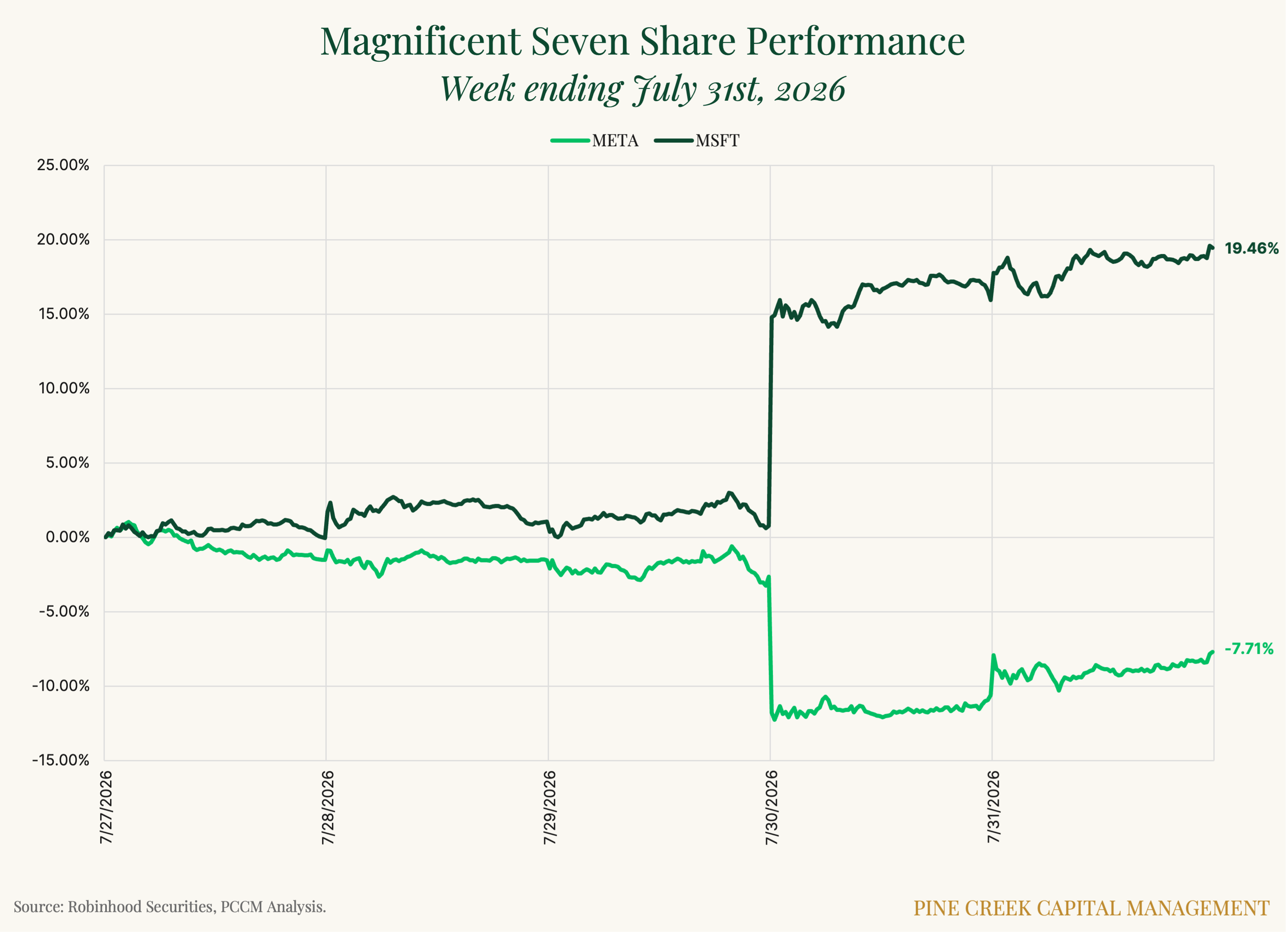
Microsoft and Meta both reported earnings on Wednesday, with Microsoft delivering an exceptionally strong quarter, beating Wall Street estimates on both Revenue and Earnings. Microsoft stock was up nearly 20% for the week.
Microsoft Earnings Highlights:
Azure reacceleration: Azure revenue grew 43% year over year, beating the 39-40% target range. This was Azure’s fastest quarterly growth since early 2022.
Backlog as capex justification: Commercial remaining performance obligations grew 84% to $678 billion. Excluding OpenAI commitments, RPO still grew 25%. Microsoft’s surge was widely attributed to pairing 43% Azure growth with an unchanged capex forecast, implying a return on its AI investment, in direct contrast to Alphabet and Meta.
Headline beats: Revenue of $90.01 billion came in 2.7% above $87.63 billion estimated, with non-GAAP EPS of $4.74 vs. $4.24 est.
Copilot monetization: Microsoft 365 Copilot passed 30 million paid seats, with net seat adds more than doubling quarter over quarter. Paid Copilot seats were 20 million as of April.
Guidance: Management guided FY27 to double-digit revenue and operating income growth.
Meta, on the other hand, delivered Revenue roughly in line with expectations and badly missed on Earnings, with the stock down 7.7% on the week.
Meta Earnings Highlights:
EPS miss: EPS of $6.18 missed consensus by about 14%, driven by $2.4 billion in legal proceedings charges and $1.18 billion in severance from an 8,000-employee workforce reduction. Revenue itself was fine: $60.8 billion, up 28% and above the $60.19 billion consensus.
Free cash flow collapse: Free cash flow fell from $8.5 billion to $784 million as capex surged to $31.1 billion, and analysts cited this as the main concern.
Second capex raise of the year: Full-year capex guidance moved to $130-145 billion, raising the low end from the prior $125-145 billion range. The market read this as spending without a clear return story: investors remain concerned about both the ROI (or lack thereof) and the potential for further increases in capex.
Confusion on the compute strategy: Analysts on the call pressed Zuckerberg on why Meta is simultaneously buying third-party compute capacity while making moves to sell its own excess compute.
Soft guidance : Q3 revenue guidance came in below market expectations, and the company raised its expected tax rate for the rest of 2026 from 13-16% to 15-17%.
Disclaimer: PCCM holds positions in both Microsoft and Meta.
Amazing Amazon | Awful Apple
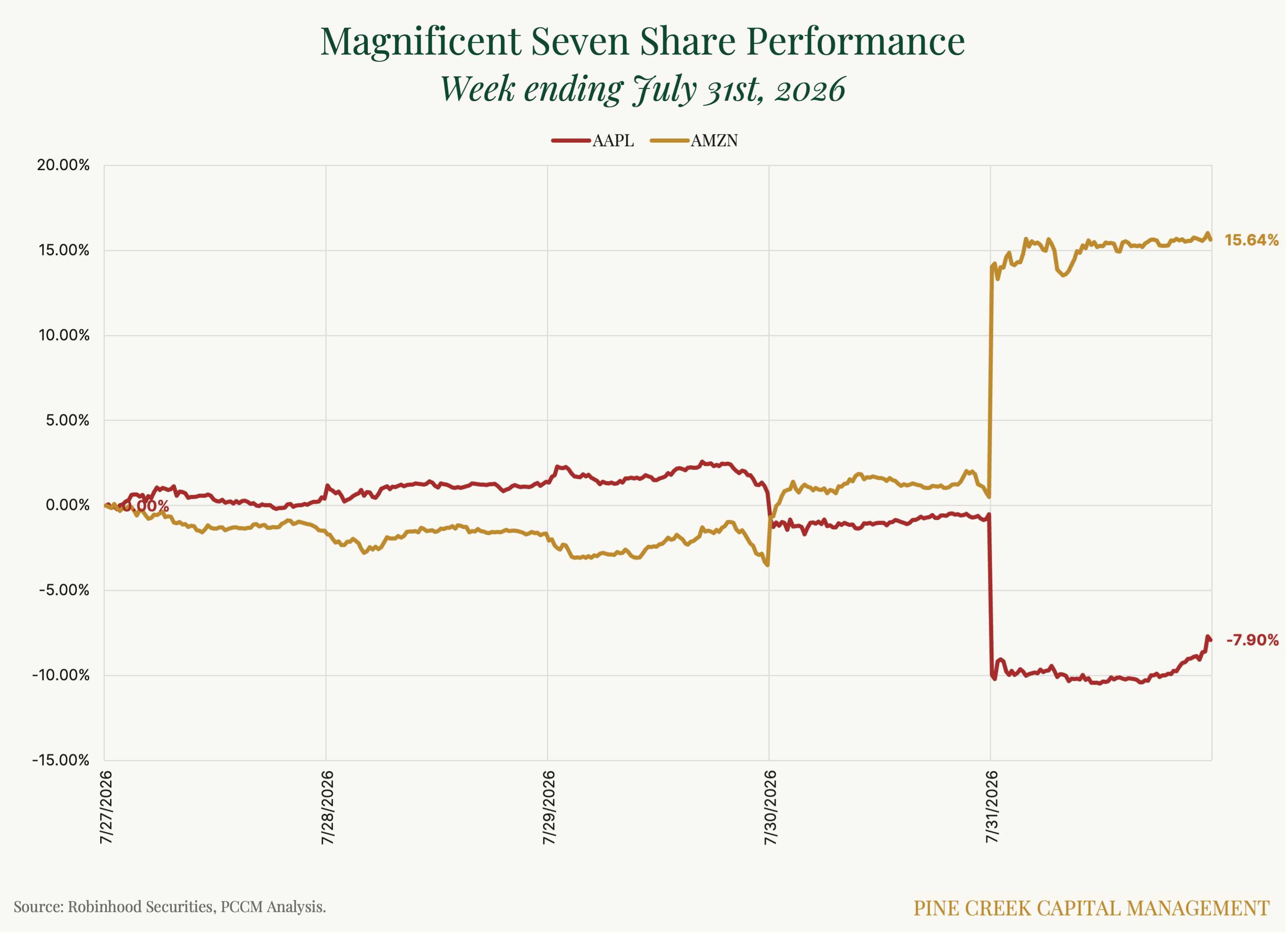
Amazon and Apple both reported earnings on Thursday, with Amazon handily beating Wall Street estimates. Investors rewarded Amazon with a 15.64% gain through the week.
Amazon Earnings Highlights
AWS acceleration: AWS revenue was $42.2 billion vs. an estimated $40.6 billion, with growth at 37% vs. estimates of 31%. This marked the fastest growth for AWS since 2021.
Record revenue: Total net sales up 20% to $200.6 billion vs. expectations for $196.47 billion.
Operating leverage: Operating income rose 43% to $27.5 billion. Operating income for the AWS segment reached $16.6 billion, up from $10.2 billion a year earlier.
Backlog and demand: AWS disclosed a $496 billion backlog and increased 2026 capex guidance to $220 billion from $200 billion. Higher memory costs were the primary reason for the increased capex guidance.
Apple also beat on both top and bottom lines, but missed expectations for revenue in Greater China along with soft guidance from management, sending the stock down 7.9% for the week. This was also Tim Cook’s final quarter as CEO.
Apple Earnings Highlights:
Revenue and Earnings Beat: EPS of $2.02 on revenue of $109.4 billion beat the $1.89 and $108.8 billion expected, on strong iPhone sales.
Services shortfall: Services revenue of $30.7 billion missed the $31.3 billion projection.
China shortfall: Greater China revenue of $18.8 billion came in below the $19.5 billion estimate, against a backdrop of Huawei and other domestic brands continuing to gain share.
Soft guidance: Apple guided current-quarter revenue growth to 9-11% versus expectations of 12%, with the CFO citing foreign exchange headwinds and supply constraints on iPhone.
PCCM does not hold a position in Amazon or Apple.
Situational Awareness
Leopold Aschenbrenner’s hedge fund Situational Awareness made headlines this week as the fund faced heavy losses on both its long and short positions. According to reports, the fund lost 67% of its value in the month of July and took steps to protect investor capital by offloading substantially all of its public stock holdings. The block trade was made with Citadel Securities, a hedge fund led by Ken Griffin.
If you have never heard of Situational Awareness, here is a brief history of the fund and its founder. Leopold joined OpenAI as a researcher in 2023 and was subsequently fired from the company in 2024 after leaking confidential information, though he contests this characterization.
The 22 year-old then turned this brief experience into a grand vision documented in a short manifesto titled “Situational Awareness.” In it, the unemployed former researcher made bold predictions, including that we would reach AGI by 2027 and that the world’s governments are not prepared. This extended blog post was widely shared among venture capitalists which led to $225 million in seed funding from the co-founders of Stripe along with additional investors.
The newly minted hedge fund manager then began investing in what he described as “obvious bets,” high momentum semiconducter and AI-adjacent stocks with an estimated 4x leverage on the portfolio. At its peak, the fund managed ~$45 billion in assets. The fund also sought to short sale software stocks as part of a broader thesis that AI is the future and software stocks will go to zero or at minimum decline massively.
Coincidentally, this is the exact opposite of our thesis here at PCCM.
This trade, as many momentum trades do, worked incredibly well with the fund posting gains in excess of a thousand percent. Until it didn’t. In July, the trade reversed, which we benefitted from: the market started rotating out of the risky AI momentum trade and into software and broader value stocks.
This reversal nearly took Situational Awareness out completely. To save the fund, Leopold sought a buyer for his leveraged positions, and was able to make a market with Ken Griffin of Citadel. When the dust settled, Situational Awareness had a 67% drawdown and lost over $20 billion of investor money. Despite this, the fund remains up 80% for the year, though we suspect much of this gain is via private market investments which are not marked to market when their publicly-traded counterparts face a steep decline.
Leopold has vowed to learn valuable lessons from this experience and continue investing in public equities. Perhaps some of these lessons may include “what is a stop limit order,” or “Long Term Capital Management case study,” or perhaps “how to reduce portfolio correlation.”
Interest Rates
Interest rates increased across the board with the 10-Year Treasury Yield at 4.75% compared to 4.69% a week ago.
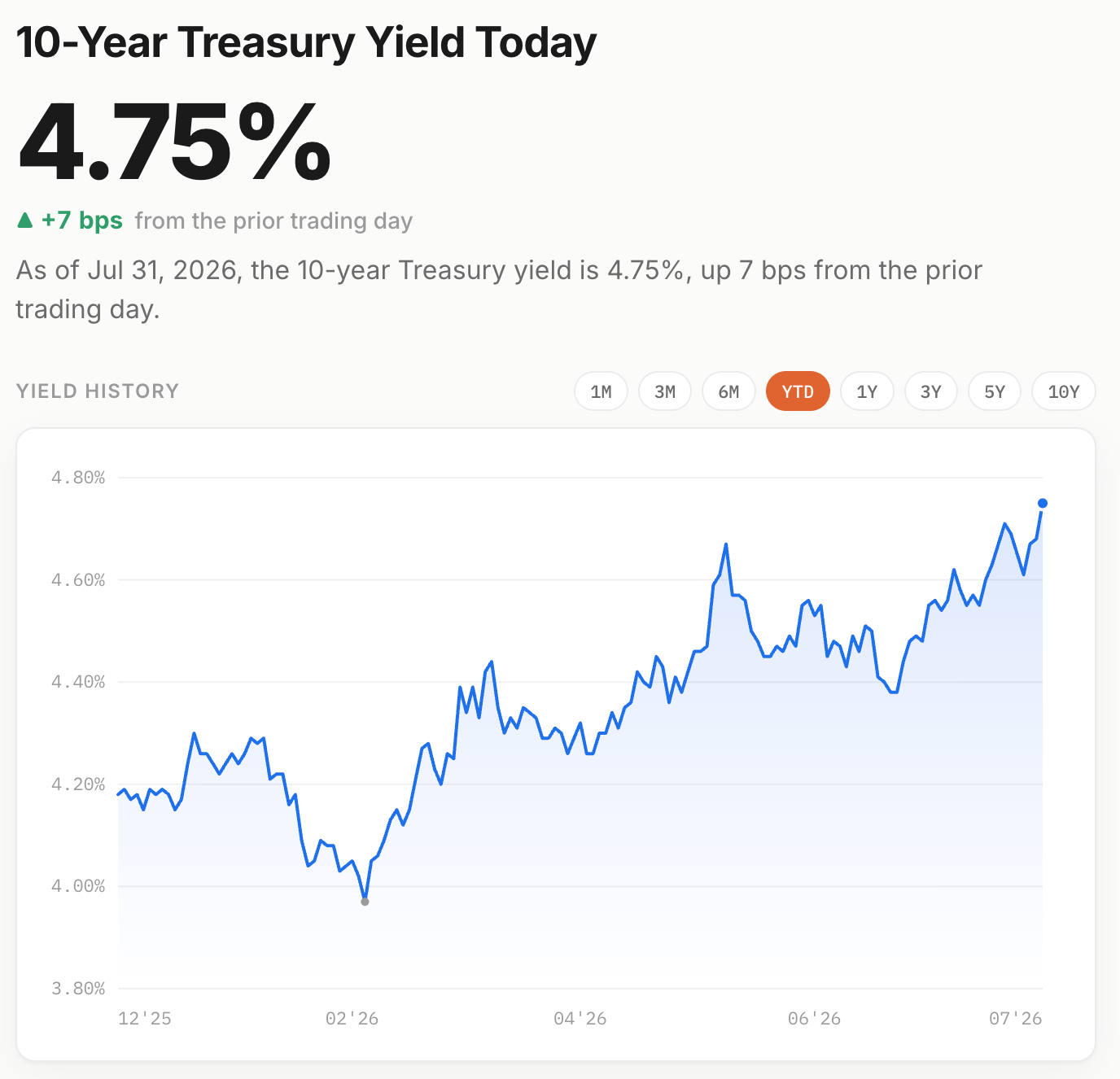
Interest rates continued their increase through the end of July, marking new highs for 2026. While the Federal Reserve declined to raise their key interest rate, the bond market has now taken the reins and decided to increase interest rates across the curve. Below is a chart showing what the US Treasury Curve looked like at the beginning of the year in orange vs. today in blue.
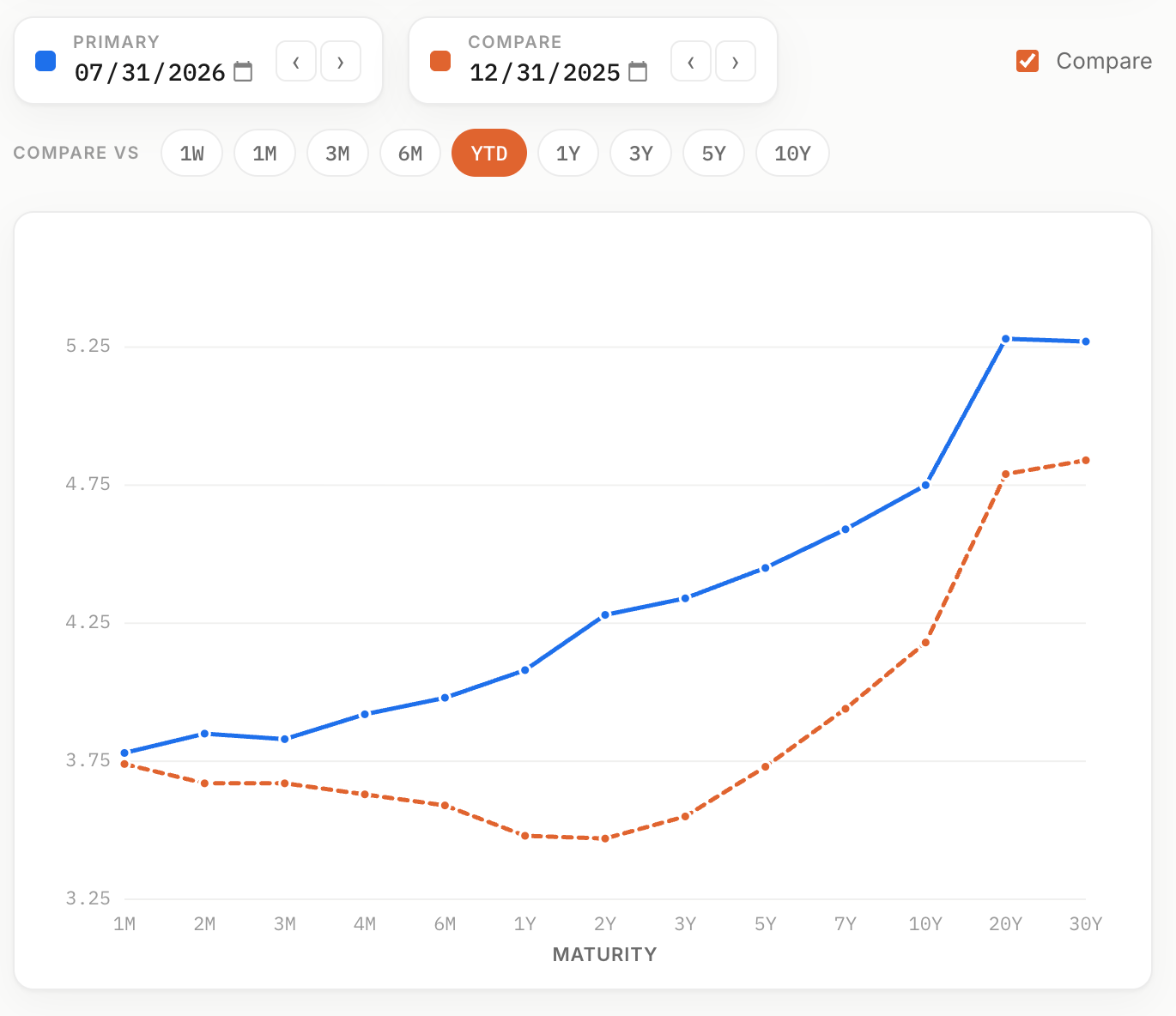
This chart illustrates the trend clearly: the 1-month maturity, which is what the Federal Reserve controls, has barely budged, while all other maturities have increased substantially. A note on how to interpret this chart.
Shorter term interest rates, like the 3-month to 2-year maturities, represent market expectations of what the Fed will do. At the start of the year, the market was expecting the Fed to cut interest rates, with yields falling through the 2-year maturity. Today, the market is now pricing in a much higher interest rate for the 2-year, reflecting the expectation now of interest rate increases.
The 3-year to the 7-year segment represent what is called the “belly” of the curve, and changes in this portion reflect the market’s expectations of the “steady state” Federal Funds rate. At the beginning of the year, the market was basically saying that the Fed Funds rate was in a good spot, and would likely stay there for the foreseeable future, give or take a quarter point.
The 10-year through the end is called the “long-end” of the curve, and this portion represents the market’s long-term expectations for growth and inflation. There is also “term premium” at this end of the curve, as investors will demand a higher yield to compensate for the uncertainty of locking their money up for decades at a time.
The long-end of the curve is one of the biggest drivers of the economy, as these yields drive lending rates for both consumers and the government. The higher these rates go, the more expensive it is to get a mortgage, since they are priced as a spread to the 10-year rate, and the more expensive it is for the government to borrow money.
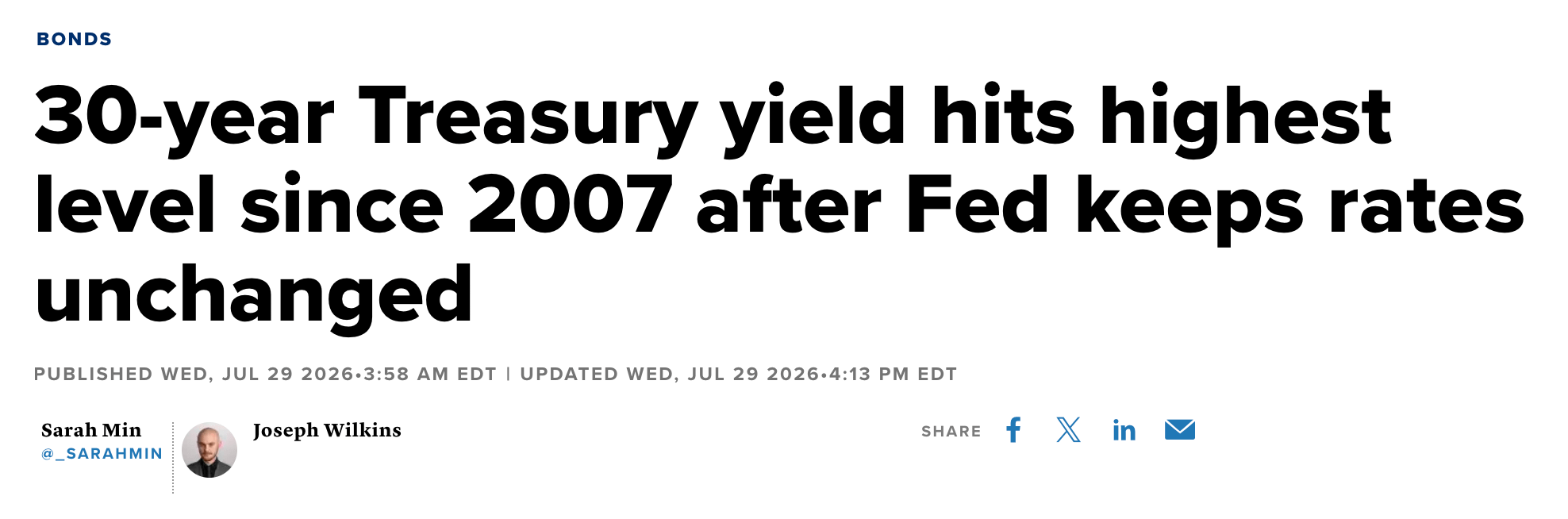
Today, these rates are hovering near levels not seen since 2007, just before the Great Financial Crisis.
These higher interest rates lead to higher interest payments from the government, with net interest costs currently comprising 3.3% of GDP which is higher than the previous high of 3.2% set in 1991.
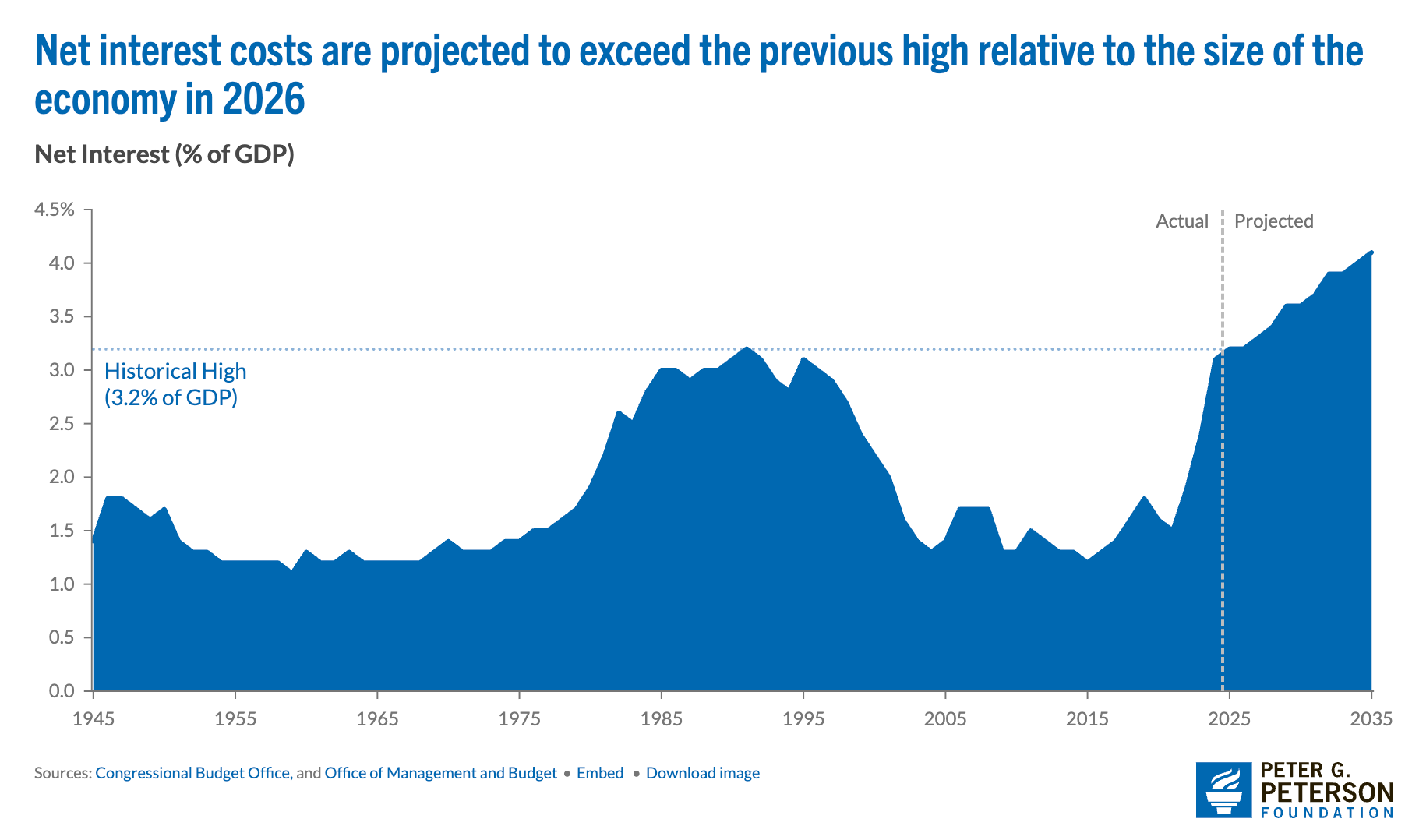
Between now and the next election cycle in 2028, we expect national debt to become a potential flashpoint among political discourse. We have more to say on this topic, which we will save for a deeper macro note in the future.
With respect to US interest rates and fixed income, we remain of the view that rates and inflation will be higher for longer, leading to restrictive monetary policy, meaning that the Fed would rather raise interest rates than lower them. We continue to believe being overweight fixed income at short durations is prudent in the current environment.
Commodities
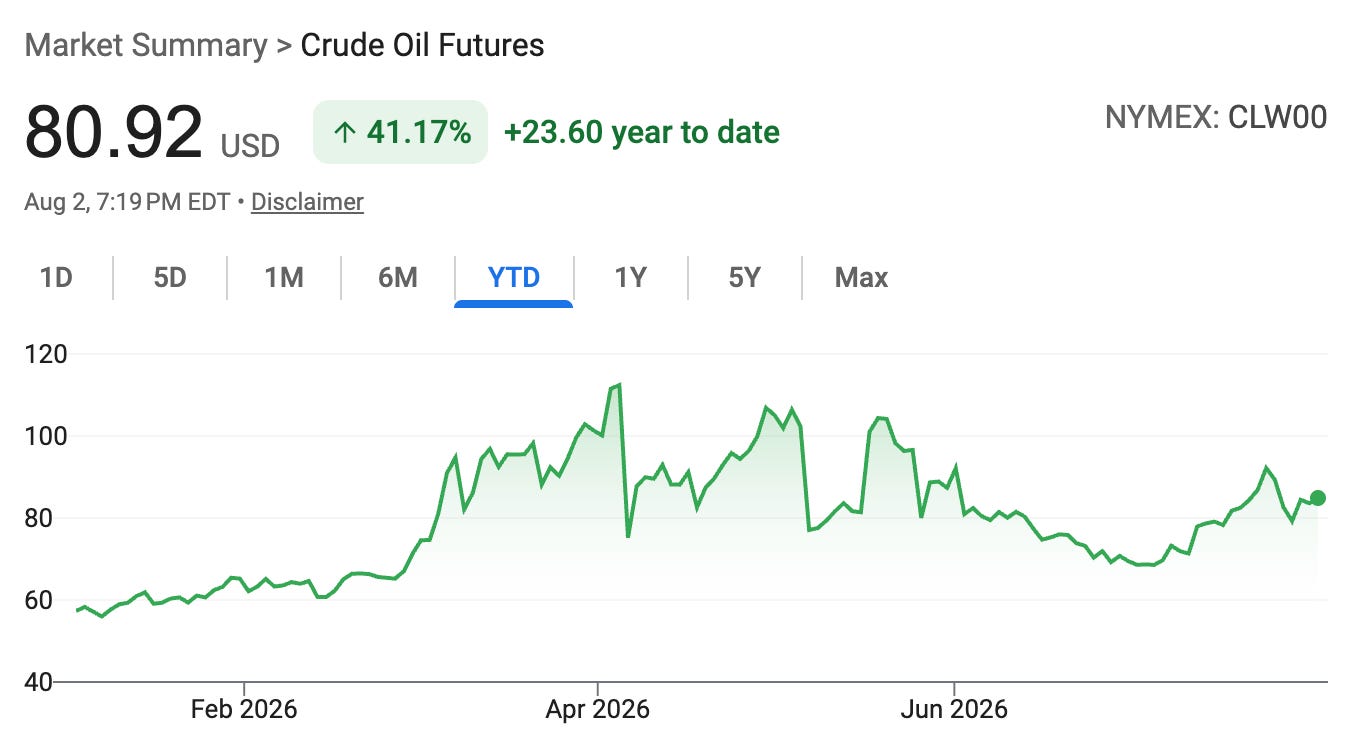
Crude Oil fell to the low $80/barrel range, down ~10% from the low $90s last week. This moderation in oil prices comes as the US continues to delay striking Iran in hopes of reaching a deal to reopen the Strait of Hormuz.
Desperate for a Deal
Last week, we analyzed an article from the Wall Street Journal which provided an inside look as to Trump’s posture towards Iran. According to staff, the President has become increasingly frsutrated with Iran and is now in “revenge mode.” This falls in line with our view outlined two weeks ago. From that market update:
Barring an improbable breakthrough in diplomacy, we believe that the situation in Iran will only get worse before it gets better for the US and her citizens. In our view, it is more likely than not that this conflict will continue to escalate. As midterm elections approach in November, the Trump Administration may become increasingly frustrated with a lack of progress on oil prices and inflation, resulting in rash decision making.
On Friday, it was reported that Trump ordered new strikes on Iran. While oil prices jumped ~6% on the news, they remained below their high of ~$92/barrel from the week prior. We found this puzzling, as this was the sharpest signal of escalation yet in the months-long conflict, and logically should send oil to to the mid-$90s. As of this writing, we know why:
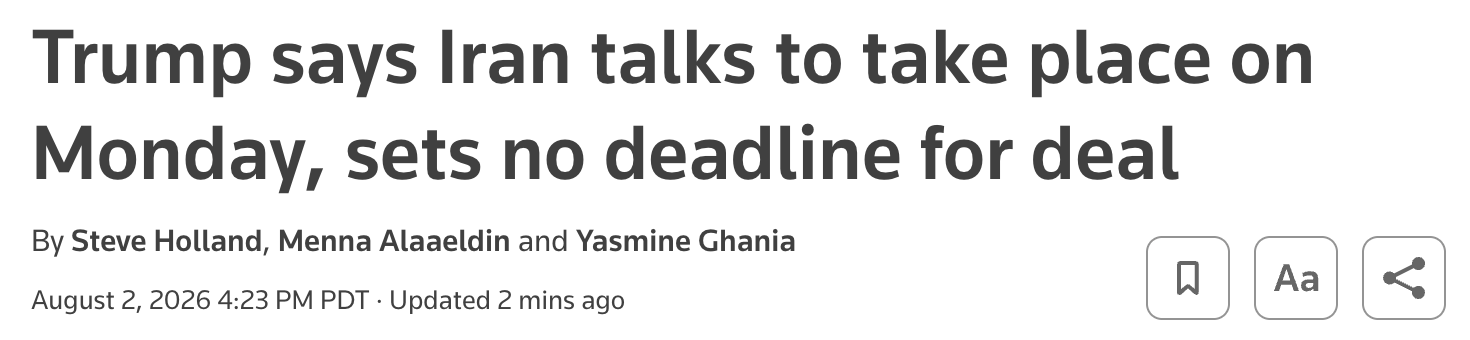
As with the muted jump in prices following the announcement of fresh strikes on Iran, oil prices fell somewhat but remain in the low $80/barrel range following the news that Trump has called off the strikes and negotiations with Iran will begin Monday.
We have seen this before, and so has the market. The above rhetoric would have investors believe that the US and Iran will negotiate directly with the goal of reopening the Strait of Hormuz and ending Iran’s nuclear threat. However, we have found that it is much more instructive to read past headlines and look at the verifiable facts. Here is where we see gaps:
“Talks begin Monday.” Between whom? About what? Anyone can talk about anything, including having talks about having talks. Are the US and Iran meeting directly to negotiate over the Strait and nuclear weapons? Or is some combination of third parties meeting to “strategize” about next steps.
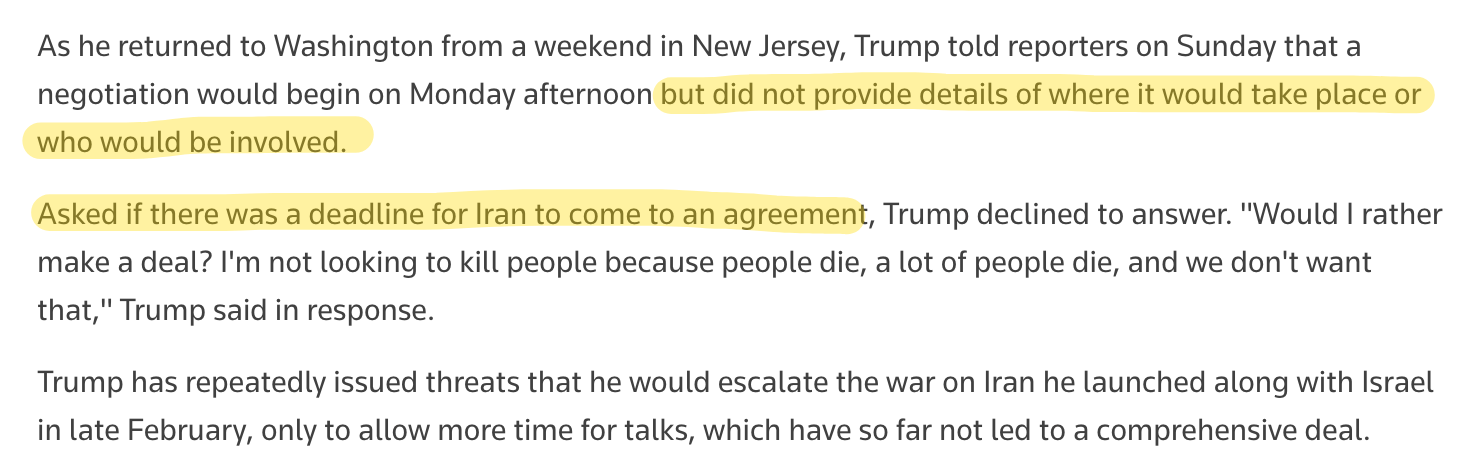
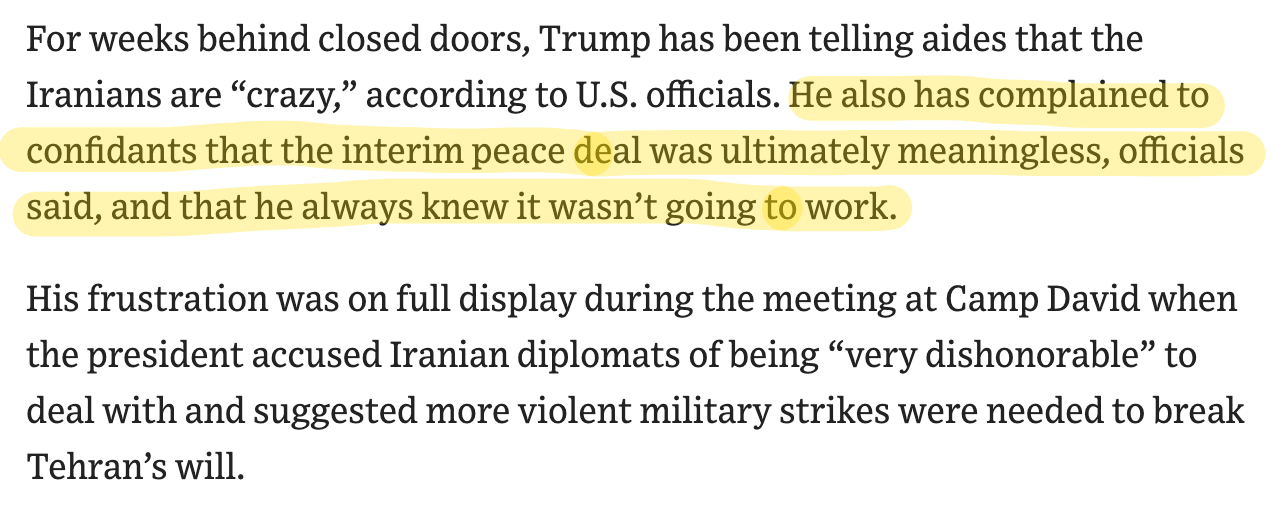
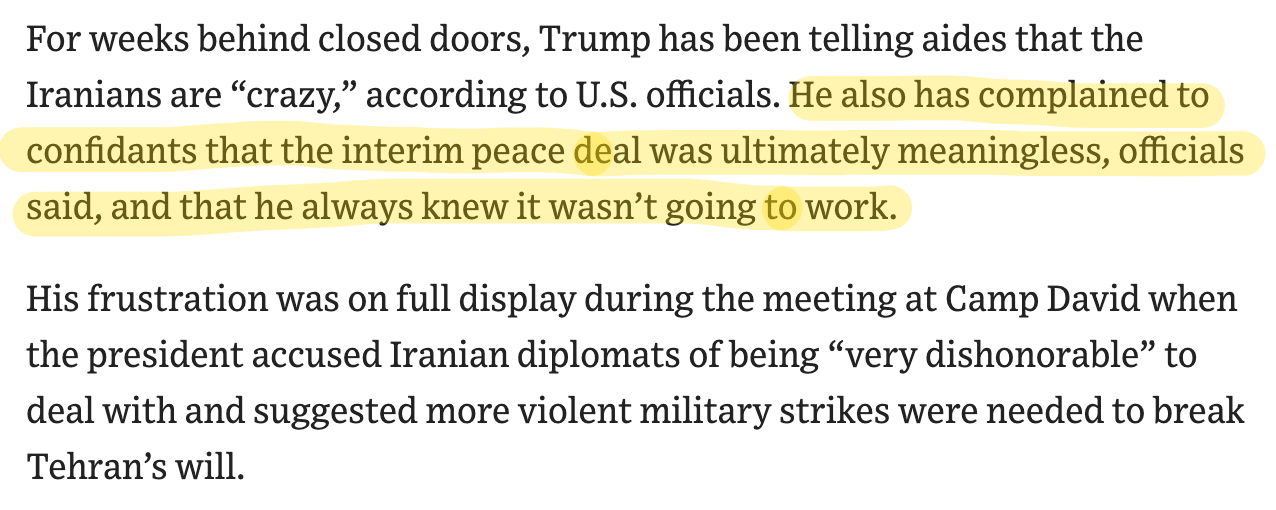
If a deal, or deal to make a deal, is reached, will either side honor it? According to reports, Trump has “always known a deal with Iran wasn’t going to work.”
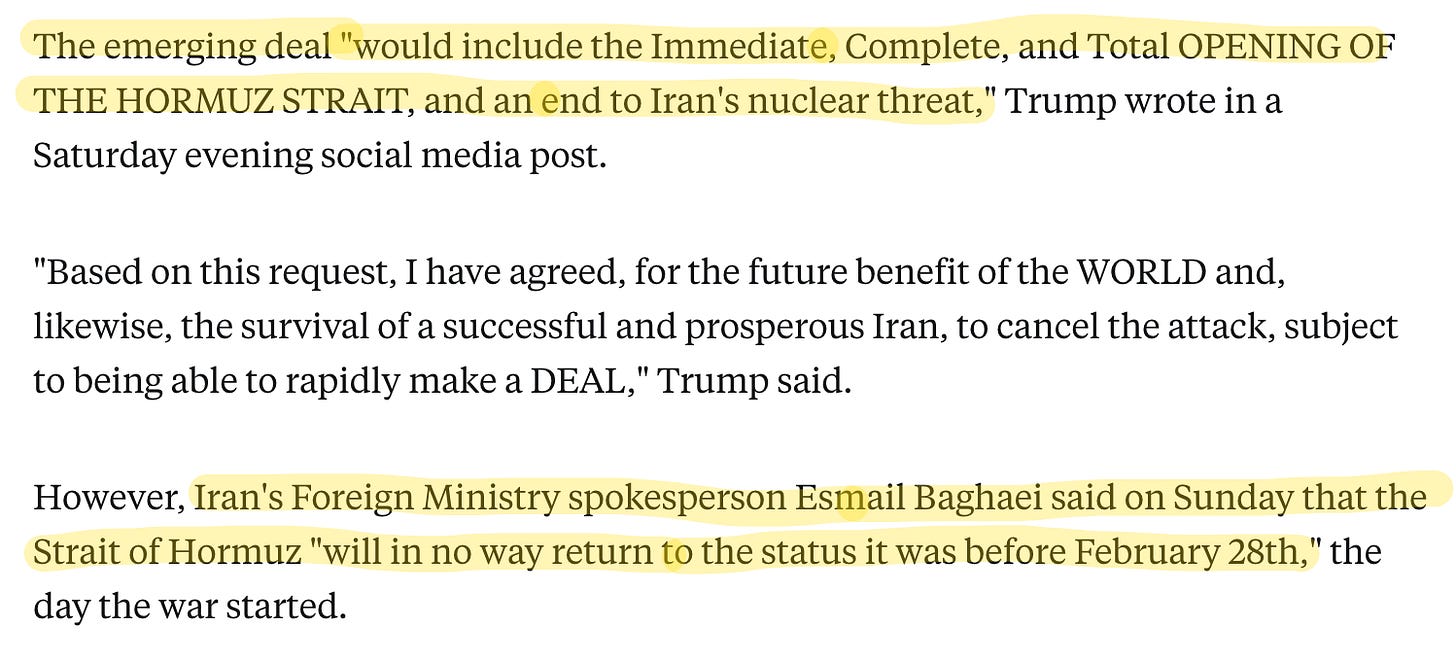
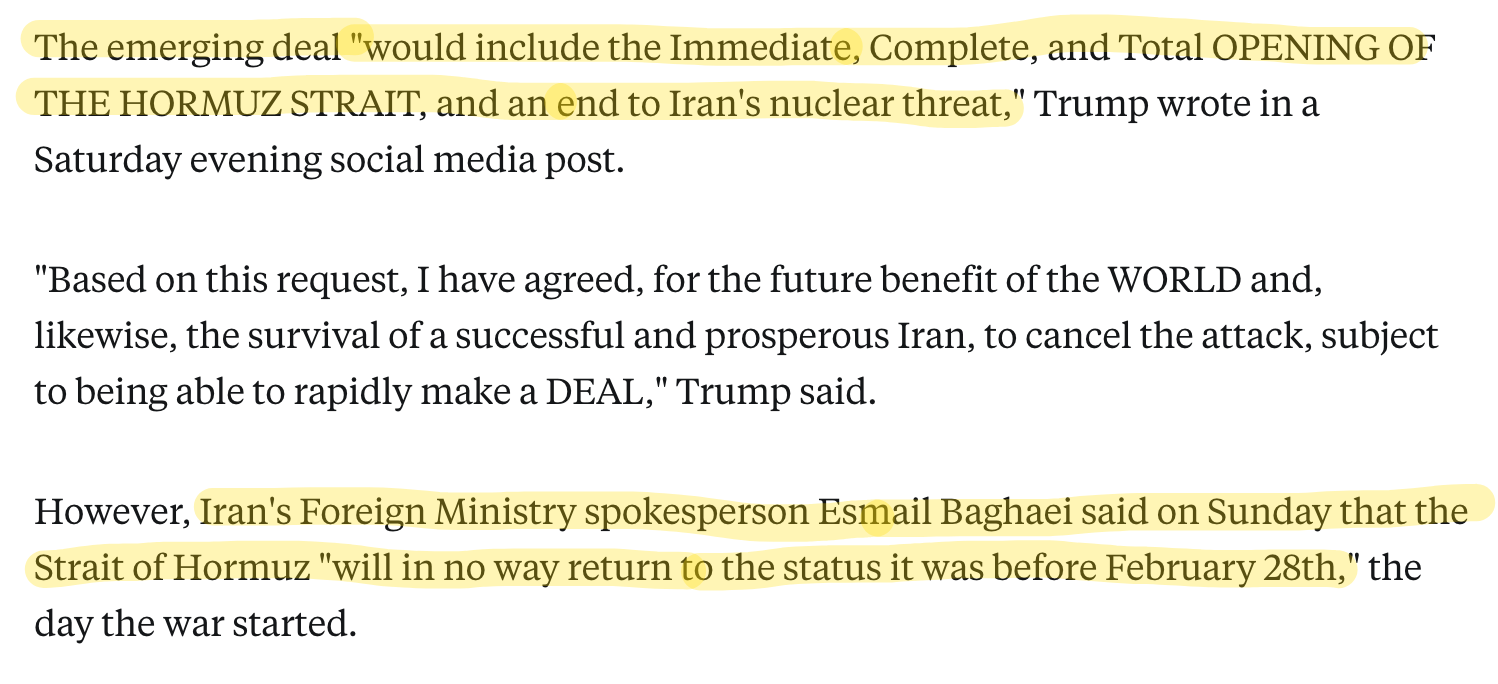
Source: WSJ, “Trump Orders Fresh Attack Against Iran as War Enters Sixth Month” Is a deal even possible? President Trump’s interpretation of this “emerging deal” is a “Complete and Total OPENING OF THE HORMUZ STRAIT, and an end to Iran’s nuclear threat.” Iran’s stance is that the Strait of Hormuz “will in no way return to the status is was before February 28th.”
Source: WSJ, “Trump Orders Fresh Attack Against Iran as War Enters Sixth Month”
Based on all available information, a few things seem clear:
There are no active negotiations between the US and Iran.
The current headlines describe a framework of a potential deal created by third party countries.
The US has revealed that it will back down from striking Iran on any hopes of making a deal, revealing our desperation for a deal.
We reiterate our prior thesis: we remain bullish on oil with a near-term target price of $100+ and a longer term floor of $65-$70 per barrel, though we do not hold a direct position in oil futures.
Gold and Silver increased 2.21% and 0.19%, respectively, while Copper increased 1.73%. The precious metals remain volatile as they are coming off historic highs and multiple competing pressures drive prices. Our view remains unchanged: we believe Gold and Silver remain too volatile to hold exposure to, while Copper remains attractive as a critical metal for supply chains.
PCCM does not hold a position in any of the three metals.
Bitcoin has continued to languish, trading down to the $63,000 per coin range. The cryptocurrency is currently down ~28% this year as investors look to other investible assets.
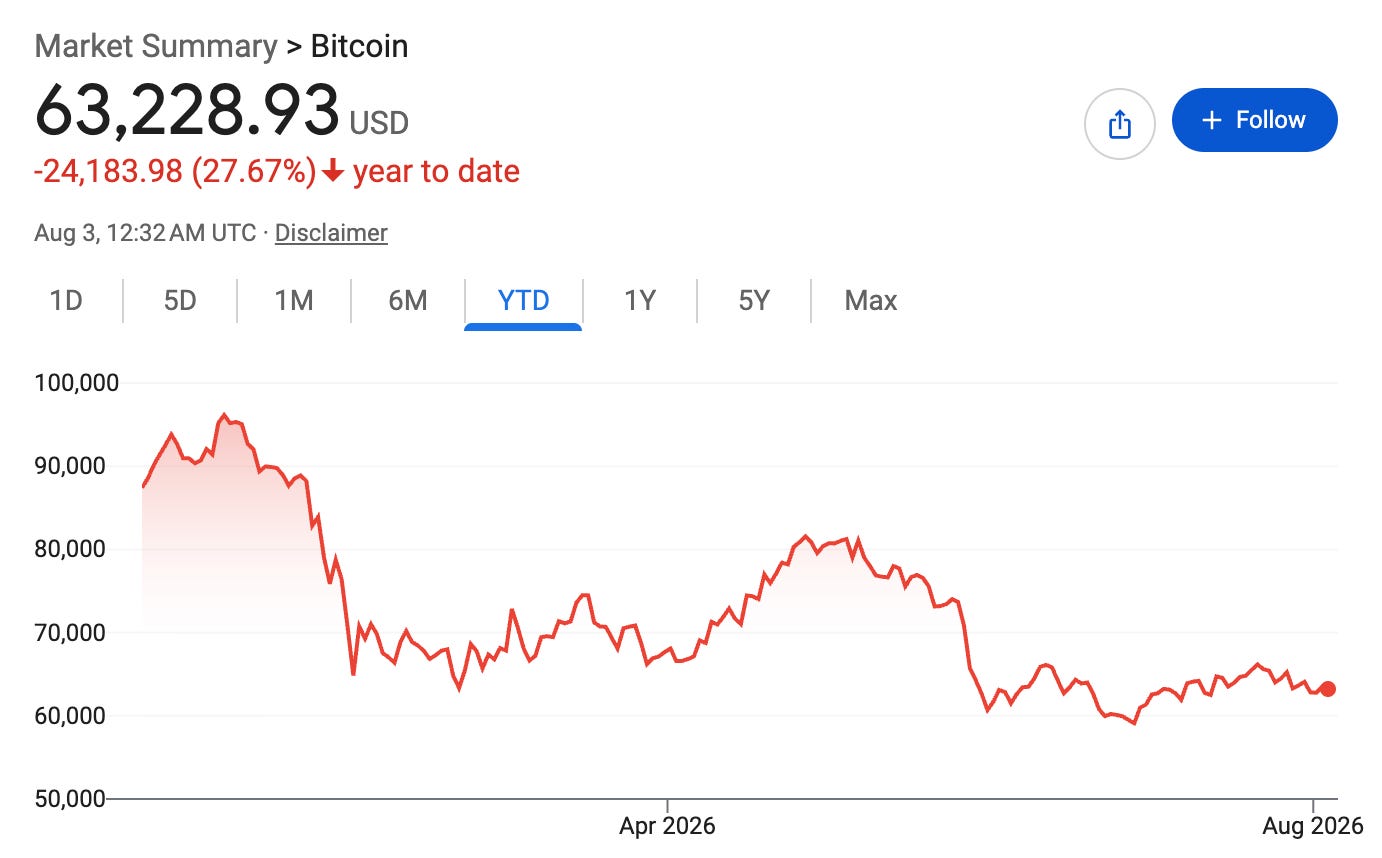
The cryptocurrency scene has been relatively quiet over the past few weeks, but we remain bearish long-term on Bitcoin and crypto-adjacent companies such as Strategy (MSTR) and its preferred stock STRC.
Note: Pine Creek Capital does not currently hold a position in MSTR, STRC, or BTC, and our long-term intrinsic value estimate of Bitcoin is $0.
Earnings & Data
This week will round out earnings season with a final hurrah of companies reporting. Most of the exciting names are earlier in the week. On the data front, we will get a mix of jobs related data with a few PMI readings.
Earnings
Monday, (8/3):
AM: Marriott, Tyson Foods.
PM: Palantir, Vertex, ON Semiconductor, Clorox, Snap, Diamondback Energy.
Tuesday, (8/4):
AM: Caterpillar, Pfizer, McDonald’s, Merck, BP, Spotify.
PM: AMD, SpaceX, Arista Networks, SanDisk, Booking Holdings, Amgen.
Wednesday, (8/5):
AM: Eli Lilly, Disney, Uber, Shopify.
PM: AppLovin.
Thursday, (8/6):
AM: ConocoPhillips, Datadog, Zoetis.
PM: Airbnb, MercadoLibre, DraftKings, Axon.
Economic Data
Monday (8/3): ISM Manufacturing PMI
Tuesday (8/4): JOLTS Job Openings
Wednesday (8/5): ISM Services PMI
Thursday (8/6): Initial Jobless Claims
Friday (8/7): Nonfarm Payrolls, Unemployment Rate
That’s all we had for you this week, let us know your thoughts by leaving a comment. You can also like this article via Substack to show your support.